

Applications
Environmental monitoring.
Trace contaminants,
measured on site.
Regulators and utilities need to detect contaminants at ever lower concentrations. Gii’s high active surface area supports trace detection of heavy metals, PFAS and other targets in water and soil.
Where Gii is used
Environmental testing built on Gii
Five areas where Gii electrodes move contaminant testing out of the central lab and into the field.
Heavy Metals in Water
Lead, cadmium, arsenic and mercury measured electrochemically at concentrations aligned to regulatory thresholds, often without pre-concentration.
PFAS and Emerging Contaminants
High active surface area supports trace detection of persistent organic contaminants where conventional electrodes lack sensitivity.
Soil and Agricultural Runoff
Nitrates, phosphates and pesticide residues tested in the field, so land management decisions are made on same-day data.
Continuous In-line Monitoring
Screen-printed electrodes integrate into fixed installations for utilities and process operators needing constant water-quality data.
Spot Testing and Surveys
Handheld, scalable, high-performance electrodes make frequent catchment-wide sampling viable rather than occasional lab submission.
Why .
.
Regulatory-grade sensitivity outside the laboratory

Trace-level detection
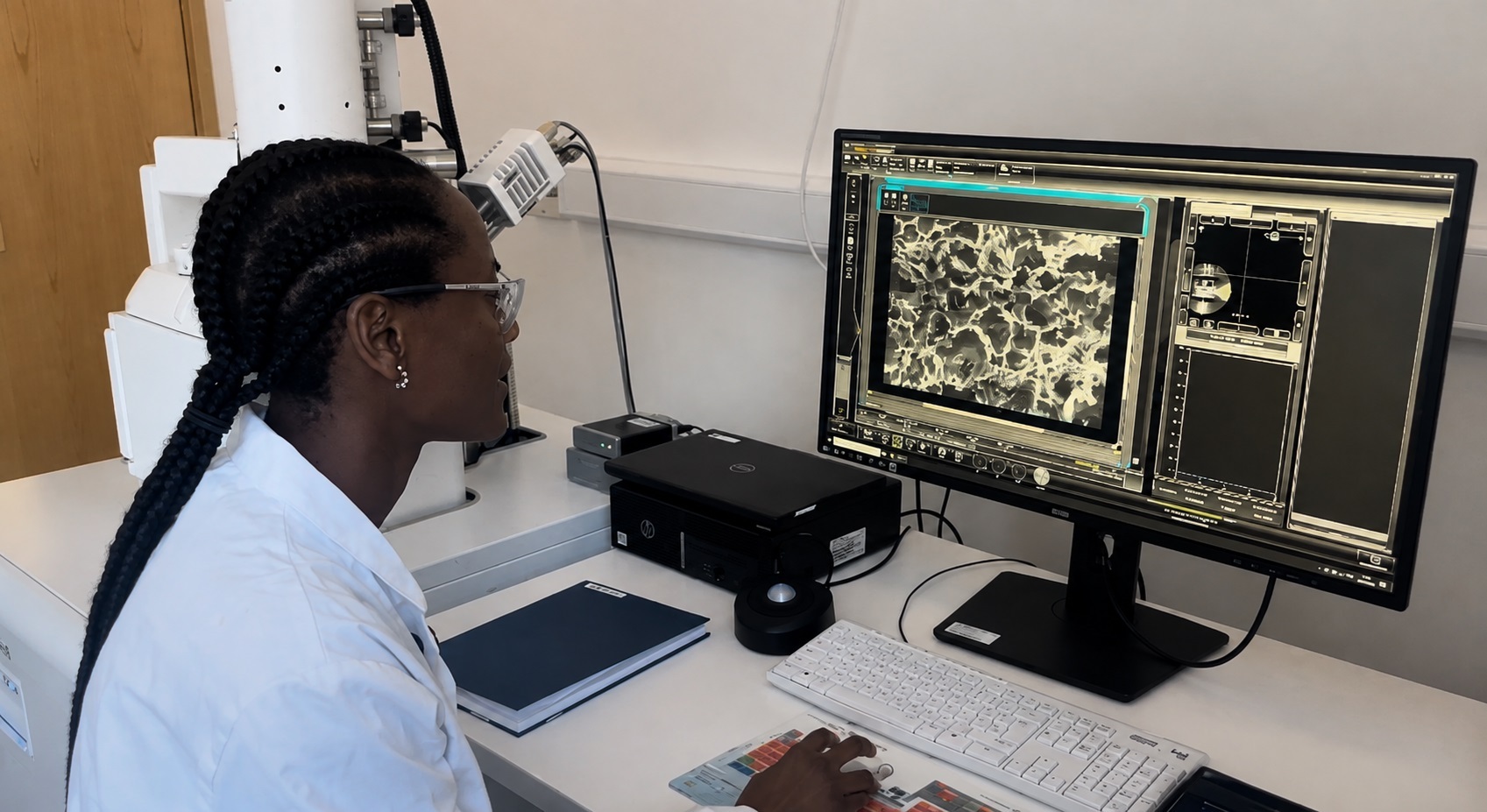
Porous pure carbon foam grown directly onto the substrate gives a far larger active surface than screen-printed carbon.

Deployable formats
The same electrode supports handheld spot testing and continuous in-line monitoring installations.

Stable in harsh conditions
Chemically stable and mechanically robust, so sensors survive real water, soil and outdoor environments.
Next step
Go deeper on the technology
Applications point the way; the platform pages hold the technical detail and supporting evidence.

Multi-analyte Sensing
Electrode arrays, surface chemistry options and characterisation data.
Learn more
Microheaters & Thin Film Heating Elements
On-strip thermal control for molecular and sample-prep steps.
Learn more
Flexible Printed Batteries
High surface area Gii electrodes for thin, flexible, printed power sources.
Learn more