

Applications
Wearables.
Power that bends
with the body.
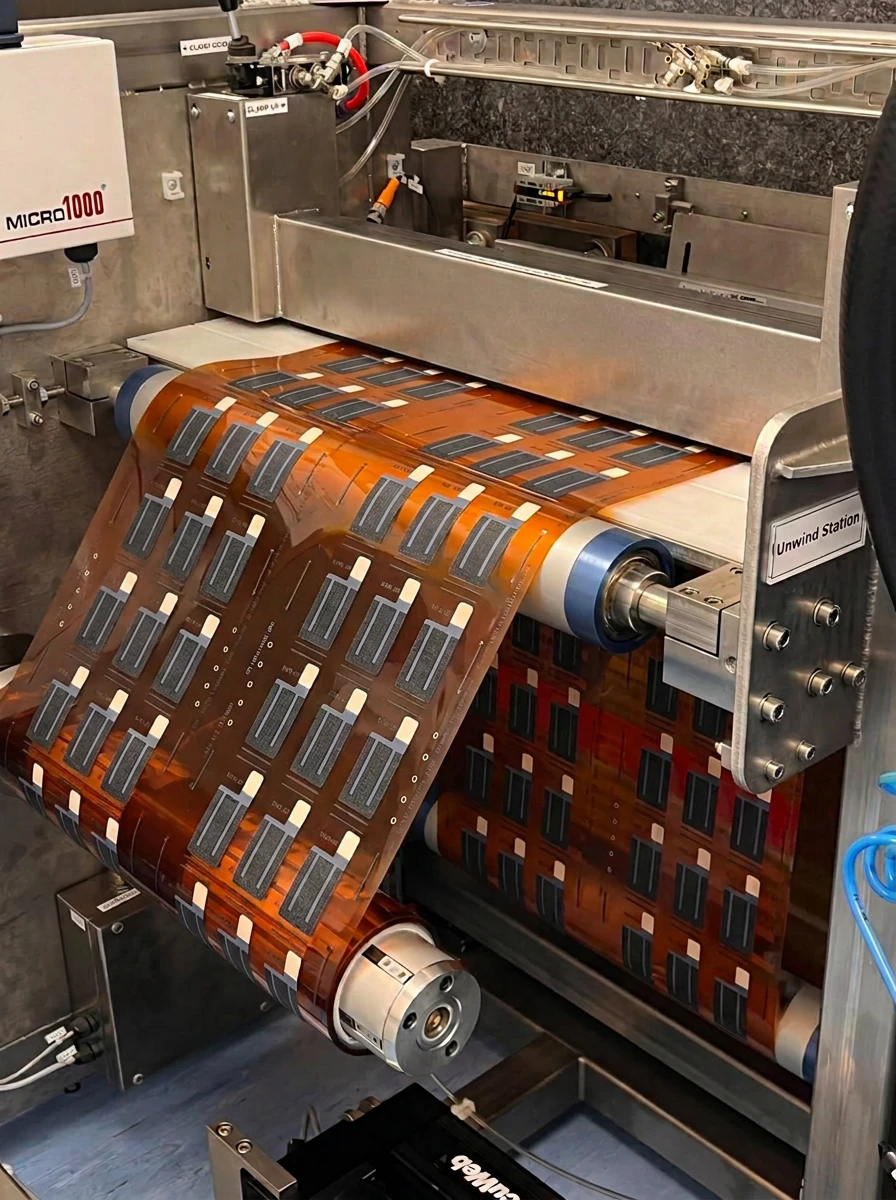
On-body devices are judged on comfort as much as performance. Gii electrodes are grown on flexible substrates, so printed cells can be thin, conformable and shaped to the patch or garment instead of a rigid cell dictating the design.
Where Gii is used
Wearable formats built on Gii
Five on-body applications where a flexible printed energy store replaces a rigid cell.
Medical Skin Patches
Single-use monitoring and delivery patches where a thin cell keeps the patch flat, comfortable and disposable.
Continuous Monitoring
Devices that record physiological signals for days, powered by a cell that conforms to the wear site.
Consumer Wearables
Bands, rings and clip-on devices where internal volume is the binding constraint on battery choice.
Smart Textiles
Garment-integrated electronics needing a flexible, low-profile energy store that survives movement.
Sport and Rehabilitation
Motion and load sensing worn during activity, where rigid components are uncomfortable and fail under flex.
Why .
.
Thin, flexible, binder-free electrodes for on-body power

Conformable by construction
Gii is grown onto flexible film, so the electrode bends with the device rather than defining its shape.

High surface area
Porous 3D pure carbon gives a highly conductive electrode and current collector without a metal foil.

Sensing on the same patch
Electrodes, heaters and sensors can be produced in one process, enabling a fully printed on-body device.
Next step
Go deeper on the technology
Applications point the way; the platform pages hold the technical detail and supporting evidence.
Flexible Printed Battery Electrodes
Electrode formats, substrates and integration support for printed cells.
Learn more
Multi-analyte Sensing
Add biomarker sensing to the wearable using the same electrode platform.
Learn more
Microheaters & Thin Film Heating Elements
On-strip thermal control for molecular and sample-prep steps.
Learn more