iGii Research Roundup – December 2025
Welcome to iGii’s Research Roundup series.
In this series, we provide brief updates on the latest academic research across the world making use of our sustainable carbon nanomaterial, Gii.
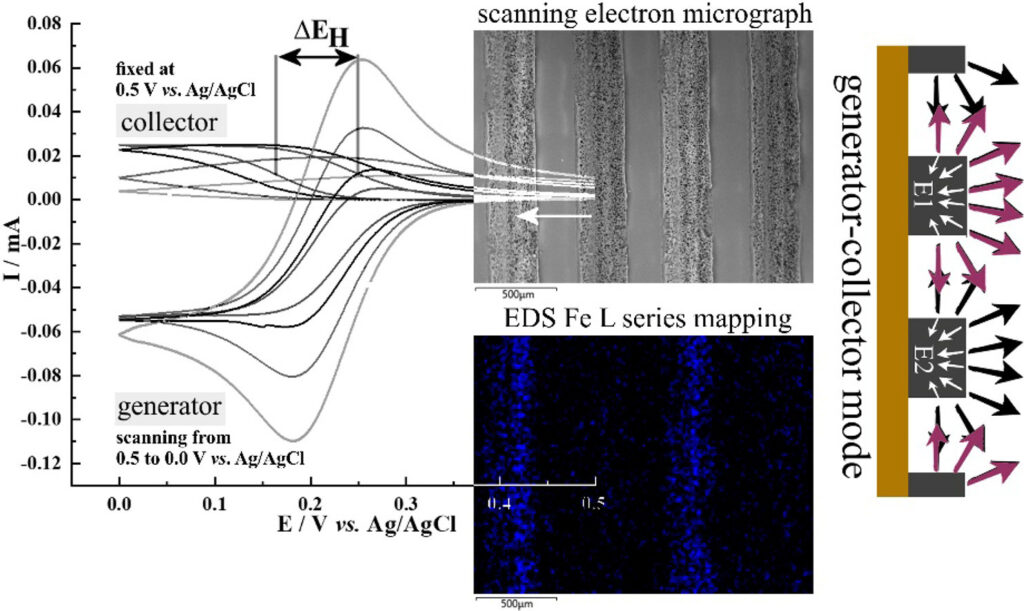
1. Graphene foam interdigitated microband arrays: – generator collector redox processes and Prussian blue
What is it?
The study at the University of Bath explored the performance of iGii’s Interdigitated Gii-Sens electrodes as a generator-collector for redox processes and Prussian blue attachment.
Why does it matter?
The interdigitated electrodes show promising results for biosensing and analytic applications (e.g. glucose biosensor) detecting H2O2. The flexible substrate enables wearable or non-planar sensor designs. The generator-collector technique enhances sensitivity and can be further optimised for maximum performance.
Want to find out more?
You can read the publication here
Reference: Tingran Liu, James E. Taylor, Pablo Lozano-Sanchez, Calum Doig, Joanne Holmes, Marco Caffio, Philip J. Fletcher, Frank Marken, Graphene foam interdigitated microband arrays: [Fe(CN)6]3-/4- generator-collector redox processes and prussian blue catalyst attachment, Electrochimica Acta, Volume 541, 2025, 147396, ISSN 0013-4686, https://doi.org/10.1016/j.electacta.2025.147396.
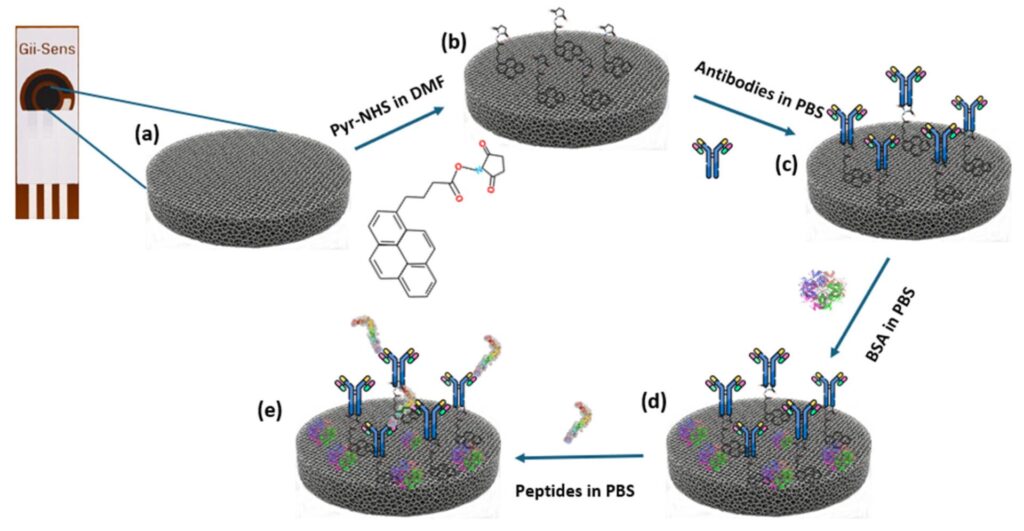
2. Electrochemical detection of key biomarkers of Alzheimer’s Disease at attamolar scale with Gii based electrodes.
What is it?
This study from the University of Plymouth demonstrates the capabilities of a Gii-based electrochemical biosensor detections of key Alzheimer’s Disease biomarkers at the attomolar.
Why does it matter?
Alzheimer’s Disease is a neurodegenerative disorder that increases in prevalence with age. It is a form of dementia and is characterised by the progressive decline of cognitive functions that can lead to difficulties in carrying out daily tasks.
While Alzheimer’s disease has no cure at present, early diagnosis can make a meaningful difference by enabling treatments that delay progression and support people in living fuller lives for longer.
The promising results indicate that Gii-Sens biosensors could drive a new generation of cost-effective, portable and reliable point of care devices for early detection of Alzheimer’s Disease, improving patient prognosis.
Want to find out more?
You can read the publication here
Reference: Dogan, Muhsin, Sophia Nazir, David Jenkins, Yinghui Wei, and Genhua Pan. 2025. “Electrochemical Detection of Aβ42 and Aβ40 at Attomolar Scale via Optimised Antibody Loading on Pyr-NHS-Functionalised 3D Graphene Foam Electrodes” Biosensors 15, no. 12: 806. https://doi.org/10.3390/bios15120806
In this edition of iGii’s Research Roundup, we explored the integration of Gii for early detection of Alzheimer’s Disease and as a generator-collector for redox processes for enhanced performance. However, these are not the only applications Gii can be used for.
We are always looking to partner with research teams to explore the endless applications of Gii, from sensing and detection to microheaters to printed primary batteries and more.
Interested in utilising Gii in your research projects? Get in touch with our team: